2019 6 Nations Round 1 Review
Many had been hoping that the opening round of the 2019 6
Nations would start to provide some answers for fans as to which team is most likely
to come out on top, not just in this championship but also in the rapidly approaching
World Cup in Japan. Three try-packed games later, and the picture is no
clearer, with a consecutive Irish Grand Slam attempt falling at the first
hurdle, Scotland impressing without ever hitting top speed, and the French being
as French as ever.
France 19-24 Wales
It all began in Paris on Friday night, when France showed
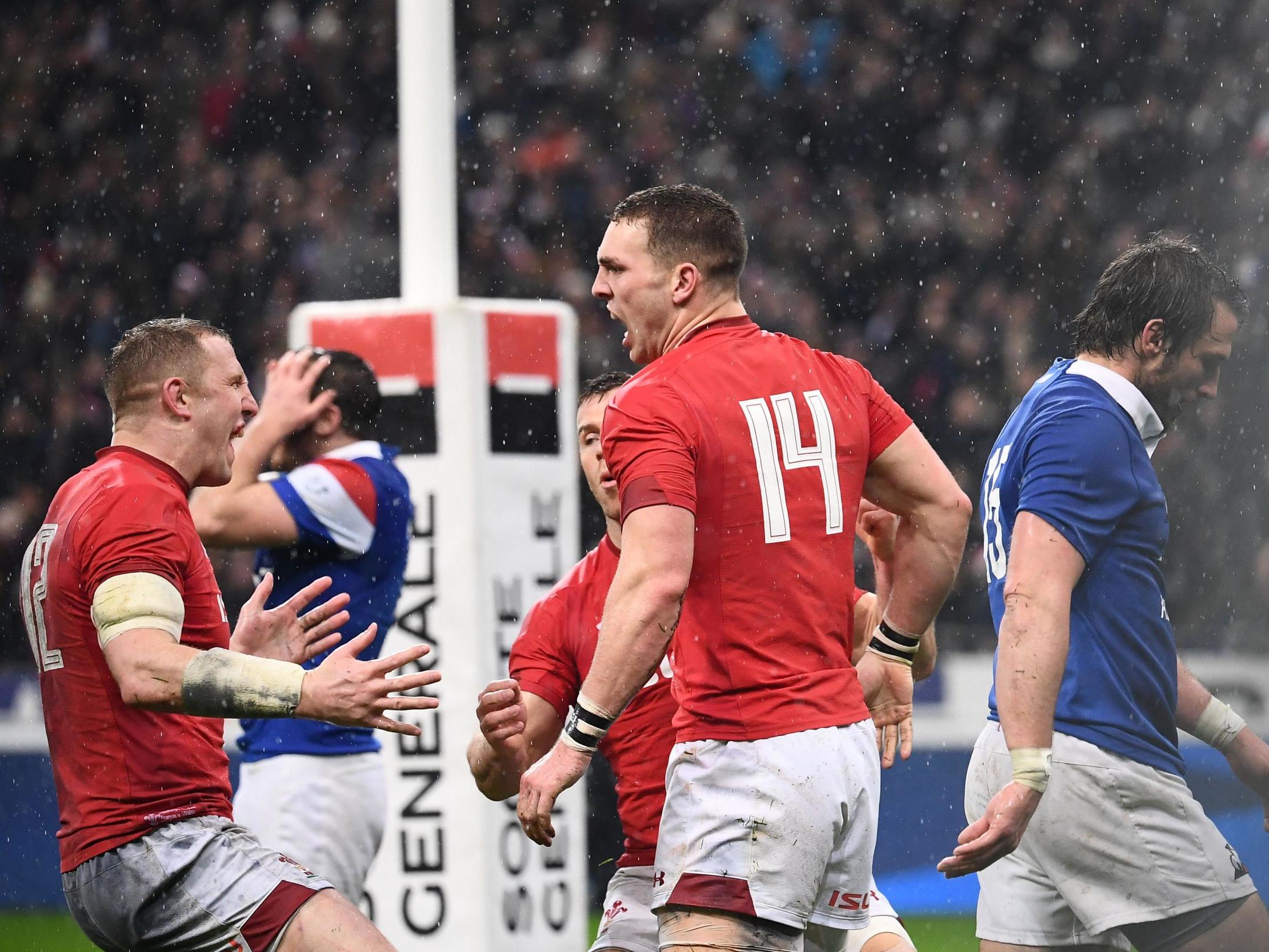
the rest of the world exactly how to bottle a 16-0 lead in style. George North couldn’t
believe his luck after first Yoann Huget then Sebastien Vahaamahina put it on a
plate for the winger, who opportunely finished off both chances. Huget’s error
was maybe not the worst but certainly the most spectacular, as the Toulouse man
managed to spill the ball on his try line right into the path of the grateful
North, who just had to dot the ball down. Huget had been pivotal to France’s
early attacking play, racing in to score a try of his own minutes after
ever-present Louis Picamoles had bulldozed over for the first score of the
night. The first half was littered by kicking and handling errors from both
sides, Gareth Anscombe of Wales being the main culprit, but it was a Camille
Lopez drop goal right on half time that added to France’s overwhelming lead. With
the new centre combination of Wesley Fofana and Romain Ntamack showing promise
and full-back Maxime Medard looking a constant threat, the points seemed in the
bag for Jacques Brunel’s men, who were looking to win their opening 6 Nations
match for the first time since 2016. However, a dormant Wales back line sprung
into life in the second half, as a brilliant Josh Adams line break and offload
left scrum-half Tomos Williams in the clear to score Wales’ first points of the
match. Despite still having a clear lead, France became nervy and the fluidity
evaporated out of the team, with more unforced errors creeping into the game.
This culminated in Huget’s shocker, leaving Wales just 2 points behind on the
scoreboard with half an hour still to play. Mass substitutions from both sides
led to the pace of the game slowing considerably as France steadied the ship,
and a ferocious tackle from new arrival Felix Lambey got the home crowd roaring
again. An exchange of penalties between Lopez and substitute Dan Biggar meant
France maintained their advantage going into the final 10 minutes and still
looked on course for the win that should have been wrapped up a long time ago.
And yet they still managed to find a way. Three absurdly
long France passes were ripe for interception, North finally picking off the
third after Vahaamahina’s reckless attempt to keep the attack going proved to
be fatal for France, as their final attack was ended prematurely by a knock-on.
Warren Gatland’s post-match remarks summed the whole event up perfectly, as he
proudly told reporters his team had “forgotten how to lose” as they secured
their 10th win in a row in scintillating style, while France have certainly
forgotten how to win as they became the first team in 6 Nations history to blow
a 16-point lead.
Scotland 33-20 Italy
It was certainly a more predictable affair in Murrayfield,
although a late Italy fightback tainted what was otherwise a supreme Scotland
display. Tomasso Allan opened the scoring for Italy from the kicking tee, but it
did not take Scotland long to get in front as an inch-perfect cross-field kick
from Finn Russell not only exposed the glaring holes in the Italian defence but
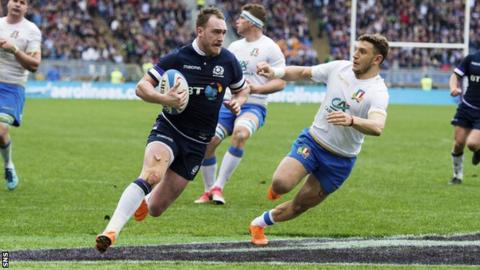
also led to the first try of the game as Blair Kinghorn gathered brilliantly
before winning the short dash to the line. A textbook display of offensive
passing culminated in Kinghorn getting his second try of the match soon after,
again diving into the left corner to make it 12-3 to the Scots. The half-time
break was welcomed by Italy, who had been relying more heavily than usual on
talismanic captain Sergio Parisse, but the interlude did nothing to dampen
Scotland’s spirit as first Tommy Seymour then Huw Jones broke through the
Italian back line. Russell continued to dictate play and a delightful grubber
kick into the in-goal area seemed to have just escaped the grasps of Stuart
Hogg, but a TMO review showed the Exeter-bound full-back had in fact got his
fingertips to the ball and applied enough downward pressure to satisfy referee
Luke Pearce. A complete refusal from the Italians to attack meant Scotland
remained on the front foot, and the bonus point was secured when a perfectly
executed dummy from Kinghorn sent 2 Italians the wrong way and left a clear
path to the try line, the Edinburgh wideman needing no further invitation to
score the first hat-trick of his international career. Criminal kicking from
Italy continued to gift Hogg the ball in attacking positions and the Azzurri
were rightly punished, with one line-break leading to a Chris Harris try while
a brilliant solo effort from Hogg himself was harshly chalked off for
obstruction.
At 33-3 and with 10 minutes to go, Scotland were cruising to
an impressive victory that was just as solid defensively as it was brilliant
offensively. However, a series of penalties conceded in their own twenty-two
made a yellow card inevitable, and replacement prop Simon Berghan being sent to
the sin bin proved to be the catalyst for three quick Italian tries, the most
impressive being finished off by Angelo Esposito after an unselfish pass from
fellow winger Michele Campagnaro. Failure to convert two of their tries reduced
the effect of Italy’s late charge, but they still reduced the first deficit to
a much more respectable 13 points as late defensive frailties certainly give
Gregor Townsend and his men something to work on before their clash with
Ireland next weekend.
Ireland 20-32 England
Ireland went into this game as
the overwhelmingly favourites for the first time in their history, but they
were met by a ferocious England side who were determined to exorcise the ghosts
of their 2018 campaign. Eddie Jones had clearly whipped his players into a frenzy
before kick-off as they came out firing on all cylinders, blowing Ireland away
early on as a very risky pass from captain Owen Farrell paid off and created a
two-on-one situation in the corner. Full-back Elliot Daly got his pass off and
left Jonny May in the clear to score in the corner, giving England a surprise
lead after just 2 minutes. It was England’s first try in Ireland since 2011, and
they continued to take the game to Ireland, who were caught off guard by their
opponent’s intent. A soft penalty gave Ireland some much-needed time in England’s
half, and a lengthy spell in England territory was rewarded with a converted penalty
from Johnny Sexton as Ireland began to grow into the game. The Irish’s spirits
were further buoyed by the dismissal of England flanker Tom Curry, albeit for
just 10 minutes after a late tackle on Keith Earls. Eddie Jones will have been
impressed by how resolutely his side defended for much of the sin bin period as
the score remained 3-7, but unrelenting Irish pressure led to Cian Healy
capping off a move that has become synonymous with Ireland, as a driving maul
from the lineout was followed by a few phases before Healy got the ball over
the line. Many a team would have folded after going behind to such a physical
and ruthless side, but England refused to shrink away and accept defeat like
they had done in 2017 and 2018. Billy Vunipola and Manu Tuilagi continued to
carry England past the gain line, while it became a guarantee that Johnny May
would successfully claim every ball that went into the air. The moment to
strike came minutes before half time when Elliot Daly grubber-kicked the ball
behind the Irish defence for Jack Nowell to chase. The Exeter wing applied enough
pressure on Jacob Stockdale for last year’s player of the championship to spill
the ball and gift a try to Daly, followed by a Farrell conversion and then
penalty right on the stroke of half-time to put England 7 points ahead. A
conscientious moment in the first half was a disallowed England try where Mako
Vunipola appeared to have stretched England’s advantage to over 10, only for
the TMO to judge that there had been a double movement, a decision that was
universally criticised by the matchday pundits, and rightly so.
Still, the ball was in England’s
court, and Ireland’s head coach Joe Schmidt attempted to respond at half-time
by bringing on attacking starlet Jordan Larmour, but the Ireland attack seemed
subdued in the second half as England began to dominate. It had become apparent
early on that England intended to kick the ball high and towards makeshift
full-back Robbie Henshaw, but Ireland were still unable to deal with it, as
half-back combo Youngs and Farrell kept Ireland penned in their own half.
Although another Sexton penalty narrowed the margin to 4, and England were
forced to bring off the immense Maro Itoje due to injury, replacement Courtney
Lawes wasted no time in unleashing a crunching tackle targeted at the ribs of
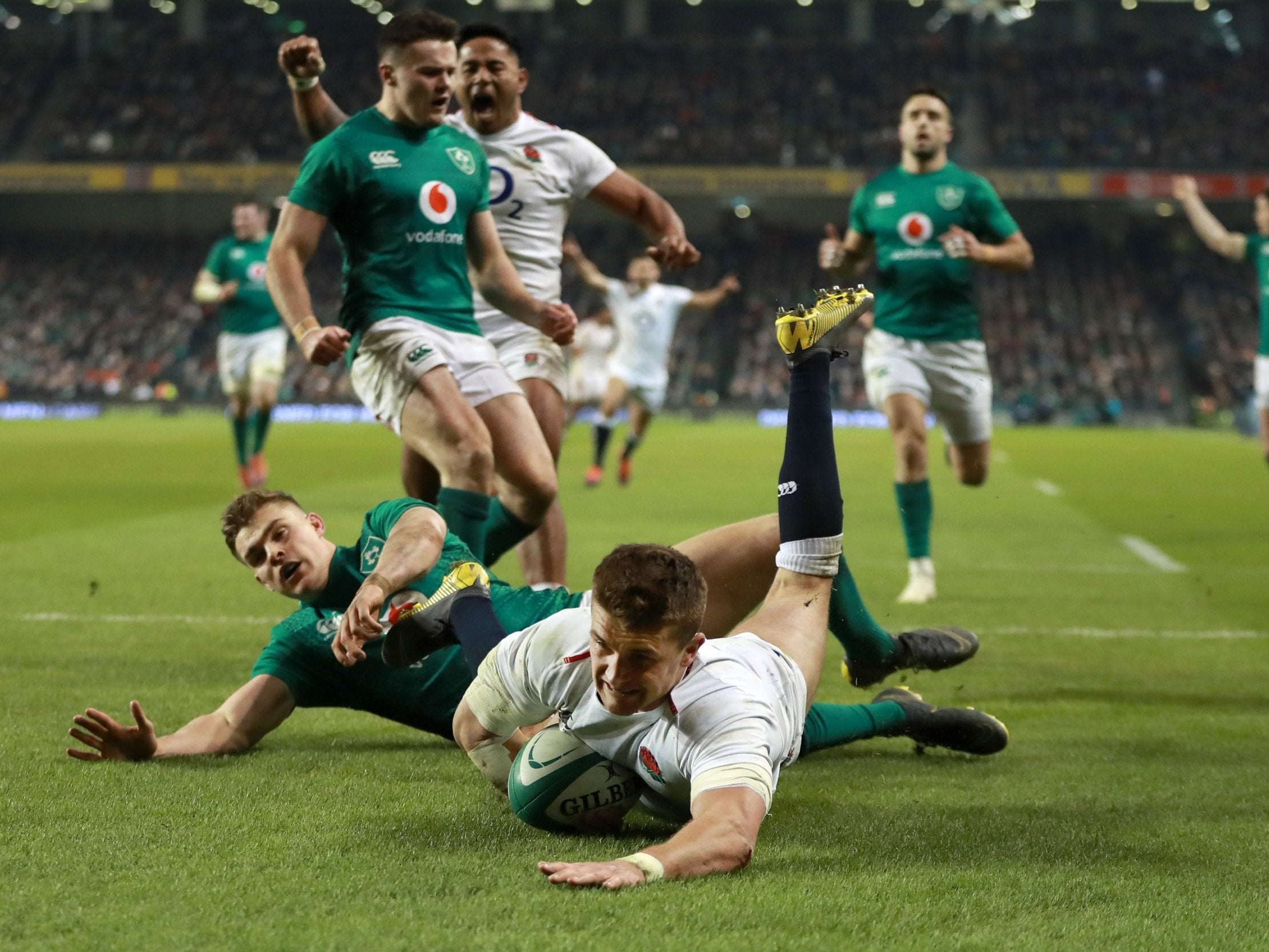
Sexton. The decisive moment came when an instinctive boot downfield from May
sat up kindly for onrushing centre Henry Slade, who beat opposite number Gareth
Ringrose to ground the ball before it went dead and send the travelling England
fans into delirium as the advantage grew to 9 with just 15 minutes to go. What
had seemed almost impossible before kick-off was becoming more and more likely
as the seconds went by.
Despite missing an earlier
attempt at goal, Farrell excelled in the role of captain for possibly the first
time, and his mercurial performance was rounded off superbly when the Saracens
fly-half landed a monster penalty from 47 yards to wrap up the win. Ireland
knew the game was up, and when Sexton’s desperate pass was somehow scooped up
by Slade to register England’s 4th try of the match, the home crowd
were stunned into disbelief. A late Ireland try from Cooney did nothing to turn
the tide, and the full time whistle was greeted with jubilation from England
players and fans. It shows how far Ireland have come under Joe Schmidt that
this result is considered to be a shock, but it is undoubtedly a huge blow to a
side who had been brimming with confidence and seemingly on course for a 2nd
Grand Slam in a row. Ireland must now pick themselves up and head to
Murrayfield next week back on form, while England will head into their
encounter with France with eyes on the main prize, a thought that they may have
previously not dared to dream of.

Comments
Post a Comment